Use the first sections to open or resume work, then bring in the project, files, and supporting materials that make the task concrete.
Quick reference / July 2026
Every OpenAI Codex command, in one practical reference
This compact poster groups the commands that shape a Codex task: start a session, set the plan, load context, work with tools and files, assess the result, and package the output for others.
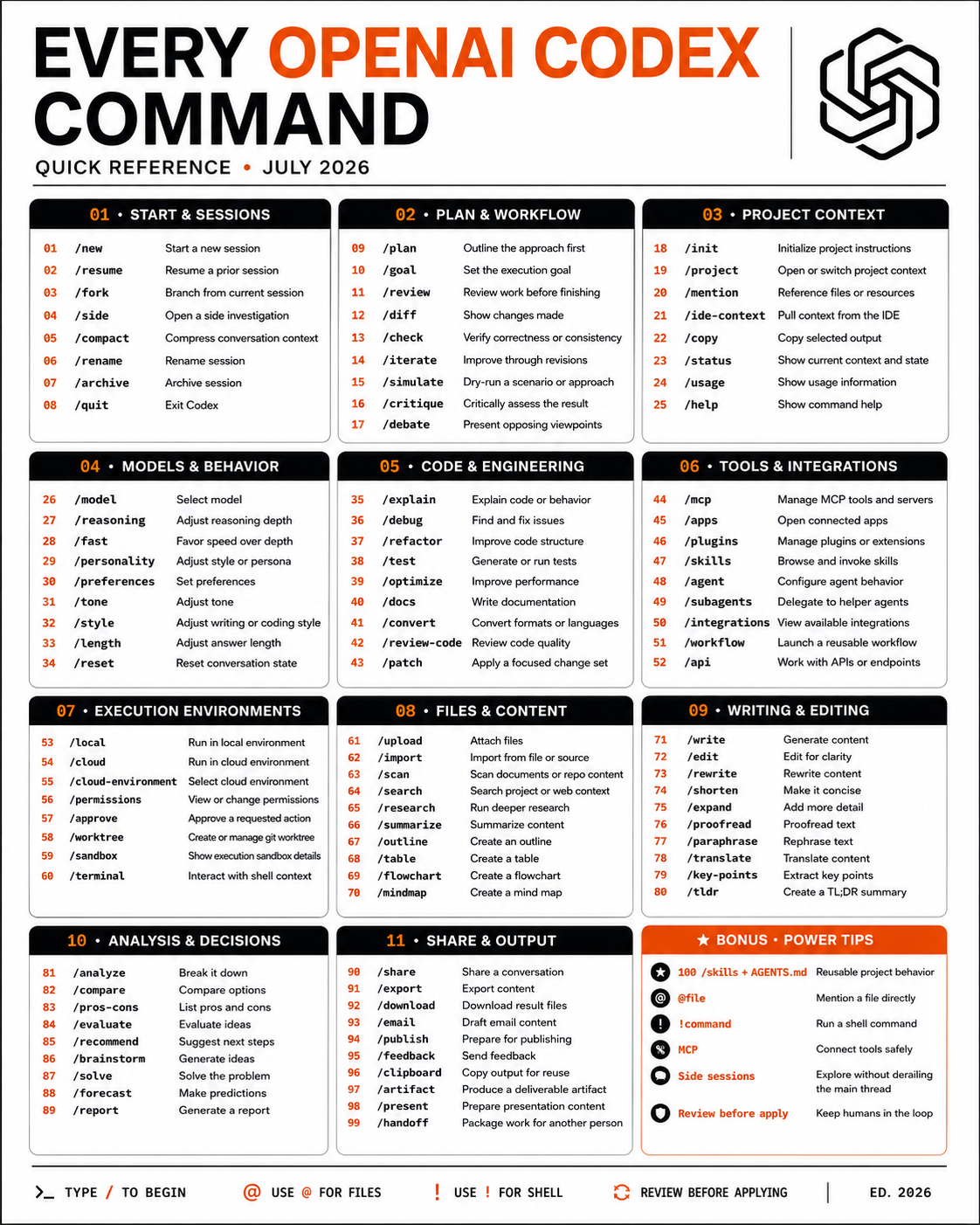
The middle of the reference covers planning, engineering, integrations, and the checks that keep a polished answer grounded.
Use the final sections to analyse trade-offs, produce an artifact, hand off the work, and keep review in the loop where it matters.
The visual reference
Keep the whole command map close
The reference is deliberately organized around a working flow rather than a flat command list. Scan the poster for the command family you need, then use the built-in help when you need the exact behaviour for your current Codex surface.
A useful working order
Treat commands as a workflow, not a menu
Frame the work
Session, goal, project
Start or resume the right session, define the outcome, and point Codex at the project or resources that carry the real context.
Clarity here prevents expensive detours later.Build with evidence
Code, tools, files
Use the engineering, integration, and content families to inspect material, make focused changes, and work from the right sources.
Keep the work bounded and traceable.Review before handoff
Check, compare, share
Test the result, examine the trade-offs, then package the outcome for the next person instead of treating generation as the finish line.
A useful output still needs a deliberate finish.The best shortcut is a clear task with a review point
The poster makes Codex feel navigable because it maps commands to real work: set context, make progress, inspect the result, and share it responsibly. Use it as a starting point—not a substitute for reviewing changes before they affect people, systems, or customers.